

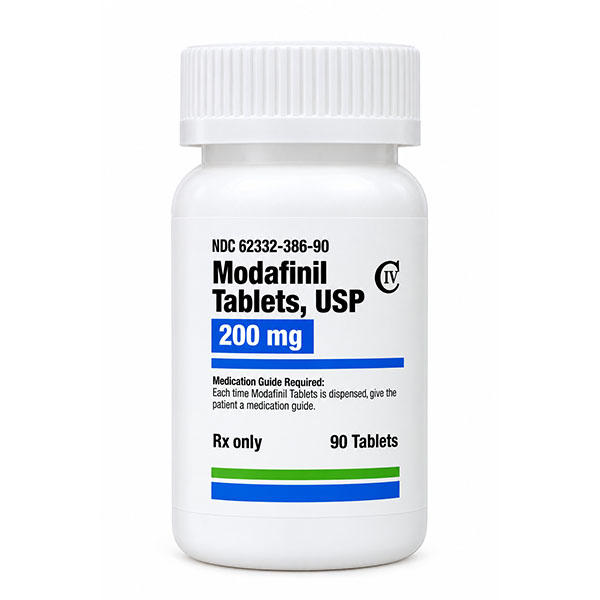

Modafinil
- Generic Name: Modafinil
- Drug Class: Wakefulness-promoting agent
- Therapeutic Category: Central nervous system medication
- Route of Administration: Oral
- Common Tablet Strengths: 100 mg and 200 mg
- Prescription Status: Prescription medication; legal classification varies by country.
Uses and Indications
Modafinil is indicated to improve wakefulness in adults with excessive sleepiness associated with:
1. Narcolepsy
A neurological sleep disorder characterized by excessive daytime sleepiness and, in some patients, sudden episodes of sleep.
2. Obstructive Sleep Apnea (OSA)
Modafinil may be prescribed to improve excessive daytime sleepiness in adults with OSA. It does not treat the underlying airway obstruction, and appropriate primary OSA treatment should be maintained.
3. Shift Work Sleep Disorder (SWD)
Modafinil may be used to improve wakefulness in adults with excessive sleepiness associated with shift work schedules.
The approved indications depend on the product label and jurisdiction. The U.S. prescribing information identifies these three indications.
How Modafinil Works
Modafinil promotes wakefulness through effects on central nervous system pathways. Its precise mechanism of action is not completely understood.
Research indicates that modafinil affects several neurotransmitter systems, including dopamine, and its wakefulness-promoting effects are different from those of traditional amphetamine-type stimulants.
The medication is intended to address excessive sleepiness associated with approved medical conditions, not to replace sufficient sleep.
Available Strengths and Formulations
Modafinil is commonly available as oral tablets.
| Formulation | Strength |
|---|---|
| Modafinil oral tablet | 100 mg |
| Modafinil oral tablet | 200 mg |
Availability may differ by manufacturer and country. Verify the specific strength and composition against the approved product label.
Dosage and Administration
Modafinil must be taken according to a healthcare professional’s prescription.
The U.S. prescribing information lists the following adult dosing recommendations:
- Narcolepsy or obstructive sleep apnea: 200 mg once daily in the morning.
- Shift work disorder: 200 mg approximately one hour before the start of the work shift.
- Severe hepatic impairment: Dose reduction is recommended.
- Older adults: Lower doses may be considered based on clinical assessment.
The appropriate dose depends on the indication, individual patient factors, other medications, and the applicable product label.
Common Side Effects
Potential side effects of modafinil include:
- Headache
- Nausea
- Nervousness
- Anxiety
- Insomnia
- Dizziness
- Dry mouth
- Reduced appetite
- Diarrhea
Side effects can vary among individuals and may depend on dosage and other medications.
Serious Side Effects and Warnings
Modafinil can cause serious adverse reactions, including:
1. Serious Skin Reactions
Rare but potentially life-threatening skin reactions, including Stevens-Johnson syndrome and toxic epidermal necrolysis, have been reported. Stop using the medication and seek urgent medical assessment at the first sign of a rash unless a healthcare professional determines another cause.
2. Hypersensitivity and Allergic Reactions
Angioedema, anaphylaxis, and multi-organ hypersensitivity reactions can occur. Symptoms may include swelling, breathing difficulty, fever, or widespread rash.
3. Psychiatric Symptoms
Modafinil may cause or worsen psychiatric symptoms in some patients. Individuals with a history of psychiatric illness require appropriate clinical assessment and monitoring.
4. Cardiovascular Effects
Modafinil may affect heart rate and blood pressure. Patients with cardiovascular conditions should discuss the risks and monitoring requirements with their healthcare professional.
5. Persistent Sleepiness
Modafinil may not completely eliminate excessive sleepiness. Patients should be assessed for ongoing sleepiness and avoid hazardous activities, including driving, if they remain impaired.
Contraindications and Precautions
Modafinil is contraindicated in patients with known hypersensitivity to modafinil or armodafinil under the referenced U.S. prescribing information.
Additional precautions include:
- History of psychiatric symptoms.
- Cardiovascular disease or elevated blood pressure.
- Liver impairment.
- Potential medication interactions.
- Pregnancy or breastfeeding considerations.
- Persistent sleepiness despite treatment.
A healthcare professional should assess individual risks before prescribing the medication.
Drug Interactions
Modafinil can affect the metabolism of certain medications and may interact with other drugs.
Important interactions include:
- Hormonal contraceptives: Modafinil may reduce their effectiveness.
- Certain anticonvulsants and other medicines metabolized by CYP enzymes.
- Warfarin: Monitoring may be required.
- Cyclosporine and other medicines affected by metabolic enzyme activity.
- Other central nervous system medications.
Discuss all prescription medications, over-the-counter products, and supplements with a healthcare professional before starting modafinil.
Pregnancy and Breastfeeding
Modafinil may pose risks during pregnancy, and pregnancy exposure should be discussed with a healthcare professional. Modafinil may also affect hormonal contraceptive effectiveness.
Patients who are pregnant, planning pregnancy, or breastfeeding should seek medical advice regarding treatment options and potential risks.
Storage Information
- Store modafinil according to the manufacturer’s instructions.
- Keep the medication out of reach of children.
- Store securely to reduce the risk of misuse or unauthorized access.
- Do not use expired or damaged medication.
- Follow appropriate medication disposal guidance.
Frequently Asked Questions (FAQs)
What is Modafinil used for?
Modafinil is a prescription wakefulness-promoting medication used to improve excessive sleepiness associated with narcolepsy, obstructive sleep apnea, and shift work disorder in approved adult populations.
Is Modafinil a stimulant?
Modafinil is classified as a wakefulness-promoting medication with central nervous system effects. It has a distinct pharmacological profile from traditional amphetamine-type stimulants.
Can Modafinil cause side effects?
Yes. Common side effects include headache, nausea, insomnia, and nervousness. Serious skin reactions and other severe adverse effects are possible.
Does Modafinil treat sleep apnea?
Modafinil may improve excessive daytime sleepiness associated with obstructive sleep apnea, but it does not treat the underlying airway obstruction. Primary OSA treatment should be addressed separately.
Can Modafinil affect birth control?
Yes. Modafinil can reduce the effectiveness of certain hormonal contraceptives. Discuss alternative or additional contraception with a healthcare professional.
Does Modafinil require a prescription?
Modafinil is a prescription medication. Its legal classification and dispensing requirements vary by country.
Disclaimer
This product description is provided for general informational and pharmaceutical reference purposes. Modafinil is a prescription medication with potential adverse effects and drug interactions. This information does not replace professional medical advice, diagnosis, treatment, or official product labeling. Consult a qualified healthcare professional before using modafinil.




There are no reviews yet.