

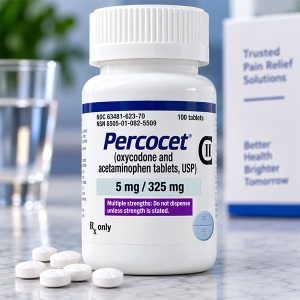
Percocet (Oxycodone / Acetaminophen) – Product Description
Product Overview
Percocet is a prescription pain-relief medication that combines two active ingredients: oxycodone hydrochloride and acetaminophen (paracetamol). Oxycodone is an opioid analgesic that works on the central nervous system to reduce the perception of pain, while acetaminophen is a non-opioid pain reliever that enhances overall analgesic effects.
Percocet is prescribed for the management of pain that is severe enough to require an opioid analgesic when alternative treatment options are inadequate. It is available in different strengths, and the appropriate formulation depends on the patient’s medical condition, pain severity, and prescribing clinician’s assessment.
Active Ingredients
- Oxycodone Hydrochloride: Opioid analgesic that acts on opioid receptors in the central nervous system to relieve pain.
- Acetaminophen (Paracetamol): Non-opioid analgesic and antipyretic that helps reduce pain and fever.
The combination provides pain relief through two different mechanisms. The oxycodone component is responsible for opioid-related analgesic effects, while acetaminophen contributes additional pain-relieving activity.
Uses and Indications
Percocet is used under medical supervision for the treatment of acute pain that is sufficiently severe to require an opioid medication.
Common clinical considerations include:
- Management of moderate to severe acute pain.
- Pain relief when non-opioid treatments do not provide adequate relief.
- Short-term pain management following certain surgical or medical procedures, when prescribed.
The medication should only be used for the condition and duration specified by a qualified healthcare professional.
How Percocet Works
Percocet contains two active ingredients that work together to relieve pain.
Oxycodone: Oxycodone binds to opioid receptors in the brain and spinal cord, altering the way the body perceives and responds to pain. It can also cause sedation, respiratory depression, and other opioid-related effects.
Acetaminophen: Acetaminophen helps reduce pain through central mechanisms that are not fully understood. It does not produce the same opioid effects as oxycodone.
The combination is designed to provide analgesia through complementary mechanisms. The strength and dosing schedule must be determined by a healthcare professional.
Available Strengths
Percocet has been marketed in different oxycodone/acetaminophen strengths. Formulations and availability can vary by country and manufacturer.
Examples of strengths historically associated with Percocet include:
| Oxycodone | Acetaminophen |
|---|---|
| 2.5 mg | 325 mg |
| 5 mg | 325 mg |
| 7.5 mg | 325 mg |
| 10 mg | 325 mg |
Important: Product strengths and approved formulations should be verified against the official product labeling applicable to the relevant country. Do not assume that every listed strength is currently available or approved in every market.
Benefits and Features
- Contains a combination of an opioid analgesic and acetaminophen.
- Intended for prescription-based pain management.
- May provide relief when pain requires opioid-level treatment.
- Combines two pain-relieving ingredients in a single medication.
- Requires professional evaluation and appropriate monitoring.
The medication is not appropriate for every type of pain, and treatment decisions should be individualized.
Dosage and Administration
Percocet must be taken exactly as prescribed by a healthcare professional. The prescribed dose depends on factors such as pain severity, previous opioid exposure, age, medical conditions, liver function, and other medications being used.
Important administration considerations:
- Follow the prescribed dosage and schedule.
- Do not take more than the prescribed amount.
- Do not take additional acetaminophen-containing medicines without checking with a healthcare professional.
- Do not change the dose or frequency without medical guidance.
- Do not share this medication with another person.
Because Percocet contains acetaminophen, excessive total daily acetaminophen intake can cause serious liver injury.
Side Effects
Percocet may cause side effects, including opioid-related and acetaminophen-related adverse effects.
Common side effects may include:
- Drowsiness
- Dizziness
- Nausea
- Vomiting
- Constipation
- Sleepiness
- Lightheadedness
- Itching
The severity and likelihood of side effects vary among individuals.
Serious side effects may include:
- Respiratory depression (slow or difficult breathing)
- Severe sedation or loss of consciousness
- Serious allergic reactions
- Liver injury due to excessive acetaminophen exposure
- Physical dependence and opioid use disorder
- Severe constipation or intestinal complications
Seek emergency medical assistance if someone taking Percocet develops very slow or stopped breathing, cannot be awakened, or shows signs of a severe allergic reaction.
Warnings and Precautions
Percocet carries important safety risks because it contains oxycodone, an opioid medication.
1. Respiratory Depression
Oxycodone can slow or suppress breathing. The risk is higher when the medication is taken in excessive amounts or combined with other substances that depress the central nervous system.
2. Acetaminophen-Related Liver Injury
Taking too much acetaminophen, whether from Percocet alone or in combination with other medicines, can cause severe liver damage. Check the ingredients of all pain relievers and cold or flu products.
3. Dependence and Misuse
Oxycodone has the potential to cause physical dependence, misuse, addiction, and overdose. Use only as prescribed and store the medication securely.
4. Alcohol and Sedatives
Combining Percocet with alcohol, benzodiazepines, sleeping medicines, or other central nervous system depressants can increase the risk of profound sedation, respiratory depression, coma, and death.
5. Driving and Operating Machinery
Percocet may cause drowsiness, dizziness, or impaired judgment. Avoid driving or operating machinery until you understand how the medication affects you and your healthcare professional advises that it is safe.
Drug Interactions
Percocet may interact with various medications and substances, including:
- Alcohol
- Benzodiazepines and other sedatives
- Other opioid medications
- Sleep medications
- Certain antidepressants and other medicines that affect serotonin
- Other products containing acetaminophen
- Medications that affect oxycodone metabolism
Tell your healthcare professional about all prescription medicines, over-the-counter products, and supplements you use before taking Percocet.
Storage Information
Store Percocet according to the product label and applicable pharmacy instructions.
- Keep out of reach of children and other people who may accidentally or intentionally take it.
- Store securely to reduce the risk of misuse or theft.
- Do not use medication that is expired or damaged.
- Dispose of unused medication through an appropriate medication take-back program when available.
Frequently Asked Questions (FAQs)
What is Percocet used for?
Percocet is a prescription medication used to manage acute pain that is severe enough to require an opioid analgesic when alternative treatments are inadequate.
Does Percocet contain oxycodone?
Yes. Percocet contains oxycodone hydrochloride and acetaminophen.
Is Percocet a prescription medication?
Yes. Percocet is a prescription opioid medication and is subject to controlled-substance regulations in applicable jurisdictions.
Can Percocet cause dependence?
Yes. Oxycodone can cause physical dependence, misuse, addiction, and overdose. It should be taken only under appropriate medical supervision.
Can Percocet cause liver damage?
Yes. Percocet contains acetaminophen, and excessive acetaminophen exposure can cause serious or potentially fatal liver injury.
Can Percocet be taken with alcohol?
Combining Percocet with alcohol can increase the risk of dangerous sedation, respiratory depression, overdose, and death. Avoid this combination and consult a healthcare professional.
Disclaimer
This product description is provided for general educational and informational purposes only. Percocet is a prescription medication containing an opioid analgesic and acetaminophen. It should be used only under the direction of a qualified healthcare professional. This information does not replace professional medical advice, diagnosis, or treatment. Always refer to the approved product label and consult a healthcare professional regarding appropriate use, dosage, precautions, and potential interactions.

There are no reviews yet.