

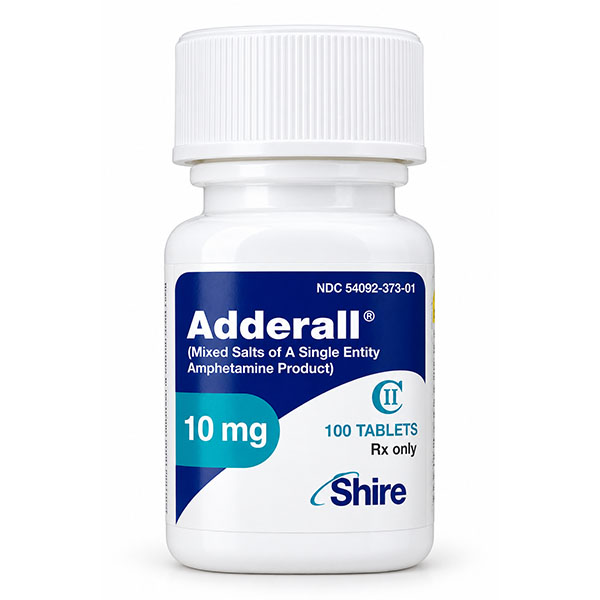
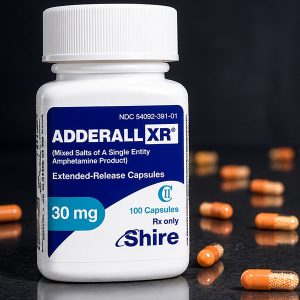
Adderall
Adderall is a prescription central nervous system (CNS) stimulant containing a combination of amphetamine and dextroamphetamine. It is used under medical supervision primarily for the treatment of Attention-Deficit/Hyperactivity Disorder (ADHD). In appropriate clinical situations, amphetamine-based medicines may also be prescribed for narcolepsy.
Adderall works by increasing the activity of certain naturally occurring neurotransmitters in the brain, particularly dopamine and norepinephrine. This activity can help improve attention and reduce symptoms such as impulsivity and hyperactivity in people with ADHD.
Because Adderall contains stimulant medications with potential for misuse, abuse, and dependence, it should be taken strictly according to a healthcare professional’s prescription and directions.
Active Ingredients
Adderall contains a combination of amphetamine salts, including:
- Dextroamphetamine saccharate
- Amphetamine aspartate
- Dextroamphetamine sulfate
- Amphetamine sulfate
The precise composition and strength depend on the specific formulation prescribed.
Product Information
| Product Attribute | Details |
|---|---|
| Product Name | Adderall |
| Active Ingredients | Amphetamine and Dextroamphetamine |
| Drug Class | Central Nervous System Stimulant |
| Primary Indication | Attention-Deficit/Hyperactivity Disorder (ADHD) |
| Other Clinical Use | Narcolepsy, depending on formulation and medical judgment |
| Formulations | Immediate-release and extended-release |
| Route of Administration | Oral |
| Prescription Status | Prescription-only medication |
| Medical Supervision | Required |
What Is Adderall Used For?
Adderall is primarily prescribed as part of a comprehensive treatment plan for ADHD. ADHD is a condition that can involve difficulties with attention, impulse control, and hyperactivity.
When prescribed appropriately, Adderall may help:
- Improve attention and concentration
- Reduce impulsive behavior
- Reduce hyperactivity
- Improve the ability to stay focused on tasks
- Support better control of ADHD-related symptoms
Treatment should be individualized by a qualified healthcare professional based on the patient’s age, medical history, symptoms, and response to therapy.
How Does Adderall Work?
Adderall affects neurotransmitter activity within the central nervous system. Its active components increase the availability and activity of dopamine and norepinephrine, chemical messengers involved in attention, alertness, motivation, and executive function.
The therapeutic effect varies between individuals. A healthcare professional may adjust treatment based on effectiveness, tolerability, formulation, and other clinical considerations.
Immediate-Release vs. Extended-Release
Adderall is available in different formulations.
Immediate-Release (IR):
The immediate-release formulation is designed to release the medication relatively quickly after administration and may require more than one dose during the day when prescribed.
Extended-Release (XR):


There are no reviews yet.