

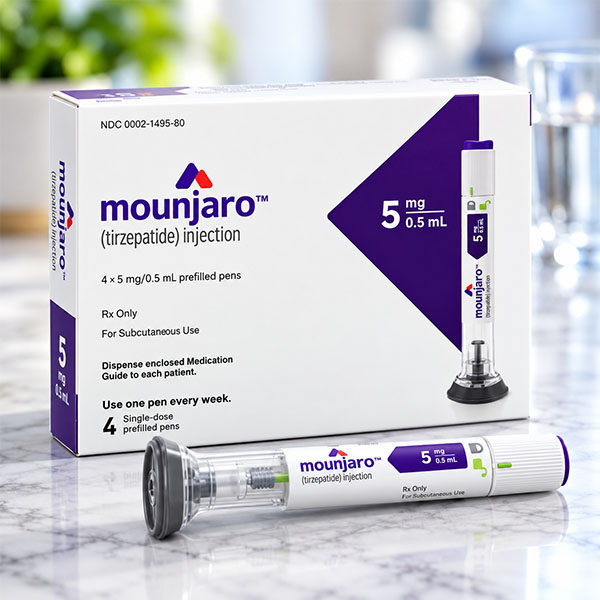


Mounjaro (Tirzepatide) – Pharmaceutical Product Information
Product Description
Mounjaro (Tirzepatide) is a prescription medicine containing tirzepatide, a dual glucose-dependent insulinotropic polypeptide (GIP) and glucagon-like peptide-1 (GLP-1) receptor agonist. It is primarily used alongside diet and exercise to improve blood sugar control in people with type 2 diabetes.
Tirzepatide works on two hormone receptors involved in blood glucose regulation, insulin secretion, appetite, and digestion. It is administered as a subcutaneous injection, generally once weekly, under the supervision of a qualified healthcare professional.
What Is Mounjaro?
Mounjaro is an injectable prescription medication developed to help manage type 2 diabetes. Its active ingredient, tirzepatide, activates both GIP and GLP-1 receptors.
These hormones help regulate blood glucose levels by:
-
Increasing insulin release when blood glucose levels are elevated.
-
Reducing glucagon secretion when appropriate.
-
Slowing the rate at which food leaves the stomach.
-
Supporting appetite regulation.
-
Improving blood glucose control alongside diet and exercise.
Mounjaro is not intended for self-medication and should be used only according to a healthcare professional’s prescription.
Key Product Information
| Product Detail | Information |
|---|---|
| Product Name | Mounjaro |
| Active Ingredient | Tirzepatide |
| Drug Class | GIP and GLP-1 receptor agonist |
| Dosage Form | Injectable solution |
| Route of Administration | Subcutaneous injection |
| Typical Frequency | Once weekly, as prescribed |
| Primary Medical Use | Type 2 diabetes management |
| Prescription Status | Prescription medicine |
| Therapeutic Area | Endocrinology and metabolic health |
| Main Action | Improves glucose regulation and insulin response |
Mechanism of Action
Tirzepatide acts on GIP and GLP-1 receptors, which are involved in the regulation of blood glucose and energy balance.
Its effects may include:
-
Enhanced glucose-dependent insulin secretion: Helps the pancreas release insulin when blood glucose is elevated.
-
Reduced glucagon secretion: May reduce excessive glucose production by the liver.
-
Delayed gastric emptying: Slows the movement of food from the stomach, which can influence post-meal blood glucose levels.
-
Appetite regulation: May reduce appetite and food intake in some individuals.
-
Improved metabolic control: Supports improved blood glucose management when combined with lifestyle measures.
The medication’s effects and tolerability can vary between individuals.
Medical Uses
Mounjaro may be prescribed for:
-
Improving blood glucose control in people with type 2 diabetes.
-
Supporting diabetes management alongside an appropriate diet and physical activity.
-
Reducing certain cardiovascular risks in eligible patients where approved and prescribed for that purpose.
Important: Mounjaro’s approved uses depend on the country, regulatory authorization, and individual patient circumstances. It should not be used to treat type 1 diabetes or diabetic ketoacidosis.
Potential Benefits
When appropriately prescribed, Mounjaro may help with:
-
Improved blood glucose levels.
-
Reduced HbA1c levels.
-
Improved insulin response.
-
Reduced post-meal glucose elevations.
-
Appetite regulation.
-
Weight reduction in some patients as a secondary effect.
Results vary depending on medical history, lifestyle, dosage, treatment duration, and individual response. Weight-related treatment indications may be authorized separately under different brand names in some countries.
Dosage and Administration
Mounjaro is administered by subcutaneous injection, usually once per week.
A commonly used adult dosing approach in the United States begins with a low dose to help the body adjust. The dose may be increased gradually by the prescribing healthcare professional based on treatment response and tolerability.
Important administration considerations include:
-
Use the medicine exactly as prescribed.
-
Do not change the dose without medical guidance.
-
Follow the product’s official instructions for injection technique.
-
Rotate injection sites as directed.
-
Do not share injection pens or needles.
-
Follow the manufacturer’s storage and handling instructions.
The appropriate dose is individual-specific and must be determined by a qualified healthcare professional.
Common Side Effects
Some patients may experience gastrointestinal side effects, including:
-
Nausea
-
Diarrhea
-
Reduced appetite
-
Vomiting
-
Constipation
-
Indigestion
-
Abdominal discomfort
-
Bloating
These effects may be more noticeable when treatment begins or when the dose is increased. Contact a healthcare professional if symptoms are persistent, severe, or interfere with fluid intake and daily activities.
Serious Warnings and Risks
1. Thyroid C-Cell Tumor Risk
Tirzepatide caused thyroid C-cell tumors in animal studies. It is not known whether this effect applies to humans.
Mounjaro should not be used by individuals with a personal or family history of medullary thyroid carcinoma or by individuals with Multiple Endocrine Neoplasia syndrome type 2, where contraindicated by the applicable product label.
2. Pancreatitis
Inflammation of the pancreas has been reported with medicines in this class. Seek urgent medical attention if severe, persistent abdominal pain occurs, particularly if it radiates to the back and is accompanied by vomiting.
3. Hypoglycemia
The risk of low blood glucose may increase when Mounjaro is used with insulin or insulin secretagogues, such as sulfonylureas.
4. Severe Gastrointestinal Reactions
Mounjaro may cause gastrointestinal adverse reactions. Patients with severe gastrointestinal disease should discuss the risks with their healthcare provider.
5. Dehydration and Kidney Problems
Vomiting or diarrhea may cause dehydration, which can contribute to kidney problems. Adequate fluid intake and medical monitoring may be necessary.
6. Gallbladder Problems
Gallbladder-related conditions, including gallstones and inflammation of the gallbladder, have been reported. Symptoms such as upper abdominal pain, fever, jaundice, or persistent nausea require medical evaluation.
7. Allergic Reactions
Serious hypersensitivity reactions may occur. Seek emergency medical assistance if symptoms such as facial swelling, breathing difficulty, severe rash, or faintness develop.
Drug Interactions
Mounjaro may interact with certain medicines or affect how some oral medicines are absorbed because it can delay gastric emptying.
Tell your healthcare provider if you use:
-
Insulin
-
Sulfonylureas
-
Oral prescription medicines
-
Medicines with a narrow therapeutic index
-
Other GLP-1 receptor agonists
-
Other tirzepatide-containing products
Do not combine Mounjaro with another tirzepatide-containing medicine or a GLP-1 receptor agonist unless specifically directed by a qualified healthcare professional.
Contraindications and Precautions
Mounjaro may not be appropriate for people with:
-
A history of serious hypersensitivity to tirzepatide or its ingredients.
-
A personal or family history of medullary thyroid carcinoma.
-
Multiple Endocrine Neoplasia syndrome type 2.
-
A history of pancreatitis or significant gastrointestinal disease, requiring individual medical assessment.
-
Conditions or medicines that increase the risk of dehydration or hypoglycemia.
Inform your healthcare provider if you are pregnant, planning pregnancy, breastfeeding, undergoing surgery, or receiving anesthesia or deep sedation.
Storage Information
Store Mounjaro according to the manufacturer’s official instructions and the specific packaging label.
General precautions include:
-
Keep the medicine within the recommended temperature range.
-
Protect it from excessive heat and direct sunlight.
-
Do not use the product if it has been improperly stored.
-
Do not use a solution that appears abnormal or does not meet the product’s instructions.
-
Keep it out of the reach of children.
-
Do not freeze the medicine unless the official product instructions specifically permit it.
Always follow the storage instructions supplied with the particular product.
Frequently Asked Questions
1. What is Mounjaro used for?
Mounjaro is primarily used with diet and exercise to improve blood glucose control in eligible patients with type 2 diabetes.
2. What is the active ingredient in Mounjaro?
The active ingredient is tirzepatide, a dual GIP and GLP-1 receptor agonist.
3. How is Mounjaro administered?
Mounjaro is administered as a subcutaneous injection, generally once weekly, according to a healthcare professional’s instructions.
4. Can Mounjaro cause nausea?
Yes. Nausea and other gastrointestinal effects are among the commonly reported side effects.
5. Is Mounjaro suitable for everyone?
No. It may be unsuitable for people with specific medical conditions, contraindications, or medication-related risks. A healthcare professional must assess whether it is appropriate.
6. Can Mounjaro be used with insulin?
It may be prescribed with insulin in certain circumstances, but the combination can increase the risk of hypoglycemia. Medical supervision is required.
7. Is Mounjaro a prescription medicine?
Yes. Mounjaro is a prescription medicine and should be used under qualified medical supervision.






There are no reviews yet.