

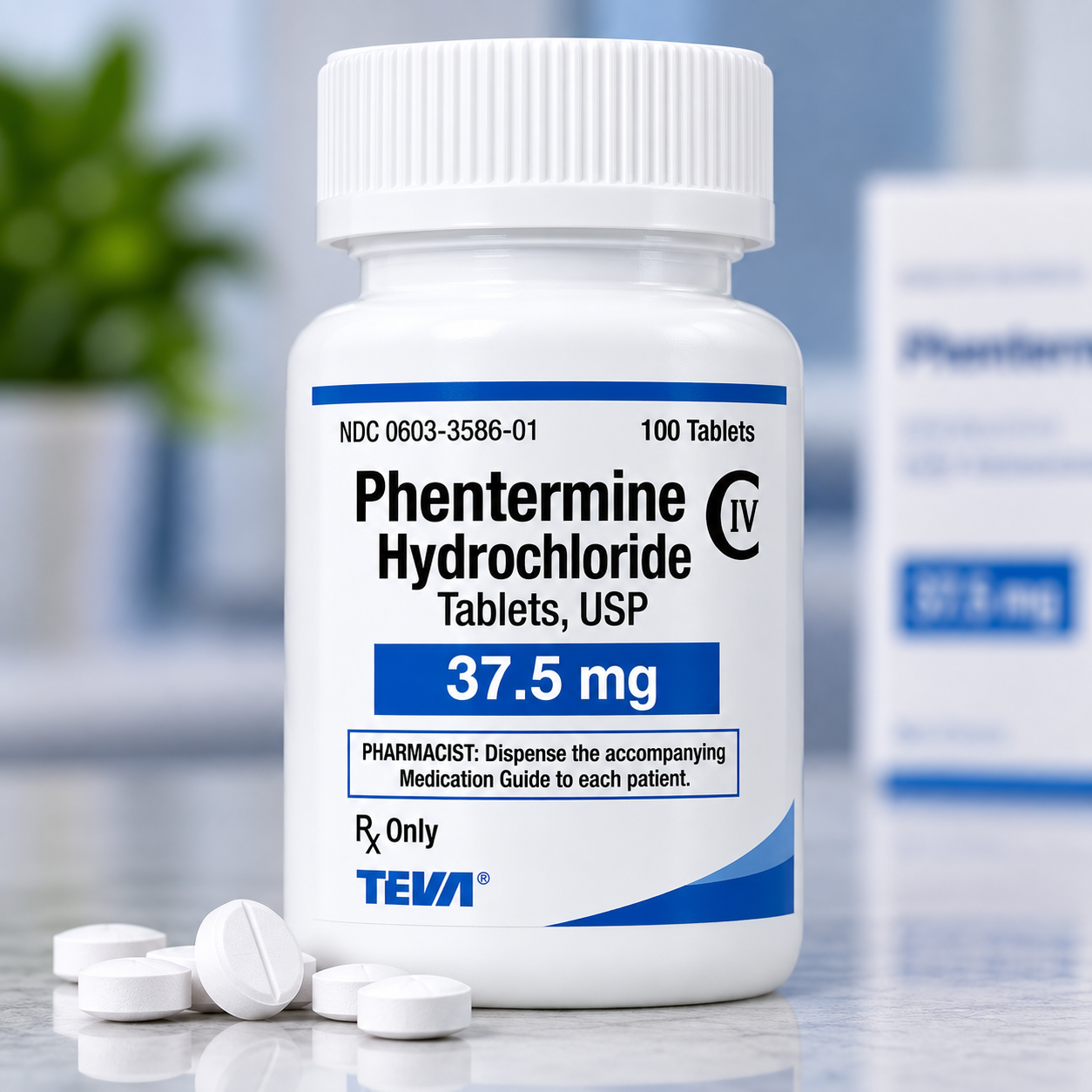

Phentermine – Complete Product Information
Active Ingredient
Phentermine Hydrochloride
- Generic Name: Phentermine hydrochloride
- Drug Classification: Sympathomimetic amine anorectic
- Therapeutic Category: Prescription weight-management medication
- Primary Indication: Short-term adjunct to weight reduction in appropriate patients with obesity
- Administration: Oral, according to the prescribed formulation
Medical Uses and Indications
Phentermine hydrochloride is indicated as a short-term adjunct to a weight-reduction regimen involving calorie restriction, exercise, and behavioral modification.
In the U.S. labeling for phentermine hydrochloride, the indication includes adults with an initial BMI of at least 30 kg/m², or at least 27 kg/m² when other risk factors are present, such as controlled hypertension, diabetes, or hyperlipidemia.
The medication is intended for selected patients after medical evaluation. Its potential benefits should be considered alongside its risks, including cardiovascular effects and the potential for misuse or dependence.
Mechanism of Action
Phentermine is a sympathomimetic amine with pharmacological activity similar to stimulant medications. It promotes the release of norepinephrine and affects central nervous system pathways involved in appetite regulation.
Its appetite-suppressing effects may help reduce food intake as part of a comprehensive weight-management program.
The precise contribution of its different pharmacological effects to weight reduction is not fully established. It should not be considered a substitute for a balanced diet, physical activity, or medical supervision.
Dosage Forms and Strengths
Phentermine hydrochloride is available in different oral dosage forms and strengths, depending on the manufacturer.
Examples of U.S. labeled products include:
| Dosage Form | Example Strength |
|---|---|
| Oral tablets | 37.5 mg phentermine hydrochloride |
| Oral capsules | 15 mg phentermine hydrochloride |
| Oral capsules | 30 mg phentermine hydrochloride |
| Other formulations | Strength varies by product |
The 37.5 mg strength refers to phentermine hydrochloride, not an equivalent amount of phentermine base. Verify the formulation and strength on the official label.
Dosage and Administration
Phentermine dosage must be individualized by a healthcare professional. The prescribing clinician determines the appropriate dose based on the patient’s clinical circumstances, response to treatment, and risk factors.
General prescribing considerations include:
- Use the lowest effective dose as directed.
- Follow the prescribed administration schedule.
- Avoid late-evening administration when directed, because of the risk of insomnia.
- Do not increase the dose without medical guidance.
- Follow specific instructions for patients with kidney impairment.
Phentermine is generally approved for short-term use in the U.S. labeling referenced above. Treatment duration and prescribing rules may vary by jurisdiction and product.
Common Side Effects
Possible side effects of phentermine include:
- Dry mouth
- Insomnia
- Nervousness
- Restlessness
- Increased heart rate
- Increased blood pressure
- Headache
- Dizziness
- Gastrointestinal discomfort
- Constipation
Side effects may vary depending on the dose, individual sensitivity, and other medications being used.
Serious Side Effects and Risks
Phentermine may cause serious adverse effects, including:
- Cardiovascular complications.
- Increased blood pressure or heart rate.
- Rare pulmonary hypertension.
- Rare cardiac valvular disease reports.
- Psychological or central nervous system effects.
- Misuse, dependence, and overdose.
- Allergic reactions.
Seek urgent medical attention for chest pain, unexplained shortness of breath, fainting, severe palpitations, or other serious symptoms.
Contraindications
According to U.S. prescribing information, phentermine hydrochloride is contraindicated in patients with certain conditions, including:
- History of cardiovascular disease, such as coronary artery disease, stroke, arrhythmias, heart failure, or uncontrolled hypertension.
- Hyperthyroidism.
- Glaucoma.
- Agitated states.
- History of drug abuse.
- Pregnancy.
- Nursing.
- Known hypersensitivity to sympathomimetic amines.
- Use during or within 14 days after treatment with monoamine oxidase inhibitors.
The applicable product label and a healthcare professional’s assessment should be used to determine suitability.
Drug Interactions
Phentermine may interact with various medications and substances, including:
- Monoamine oxidase inhibitors (MAOIs).
- Alcohol.
- Certain medicines that affect blood pressure.
- Insulin and oral diabetes medicines.
- Other weight-loss medications.
- Certain medicines that affect the central nervous system.
Do not combine phentermine with other weight-loss products or prescription medications without consulting a healthcare professional.
Pregnancy and Breastfeeding
Phentermine is contraindicated during pregnancy under the referenced U.S. labeling. It is also contraindicated for nursing mothers in that labeling.
Patients who are pregnant, planning pregnancy, or breastfeeding should discuss medication use with a qualified healthcare professional.
Storage Information
- Store according to the manufacturer’s instructions.
- Keep out of reach of children and unauthorized individuals.
- Store securely to reduce the risk of misuse.
- Do not use expired or damaged medication.
- Dispose of unused medication through an appropriate medication take-back program when available.
Frequently Asked Questions (FAQs)
What is Phentermine used for?
Phentermine is a prescription appetite suppressant used as a short-term adjunct to a weight-reduction program in eligible patients with obesity.
Is Phentermine a stimulant?
Phentermine is a sympathomimetic amine with stimulant-like pharmacological effects and appetite-suppressing activity.
Can Phentermine cause side effects?
Yes. Possible side effects include insomnia, nervousness, dry mouth, increased heart rate, and increased blood pressure. Serious adverse effects are also possible.
Is Phentermine suitable for everyone?
No. Patients with certain cardiovascular conditions, hyperthyroidism, glaucoma, pregnancy, and other contraindications may not be suitable candidates.
Can Phentermine be used long-term?
The referenced U.S. phentermine labeling indicates short-term use. The appropriate duration depends on the approved product, local regulations, and the prescribing clinician’s judgment.
Does Phentermine require a prescription?
Phentermine is a controlled prescription medication in the United States. Legal classification and availability vary by country.
Disclaimer
This information is intended for educational and pharmaceutical reference purposes. Phentermine is a prescription medication with potential cardiovascular and misuse-related risks. This content does not replace professional medical advice or official prescribing information. Consult a qualified healthcare professional before using phentermine.

There are no reviews yet.