

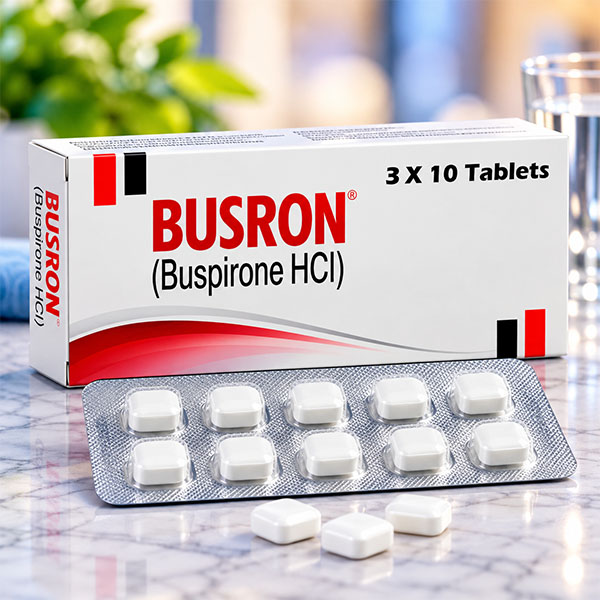

Busron is a brand name used for medicines containing buspirone hydrochloride, an anxiolytic medication primarily prescribed for the management of anxiety disorders. Product records identify Busron as a buspirone-containing tablet, including 5 mg and 10 mg strengths in some markets. The exact strength and manufacturer should be verified from the product packaging.
Product Description
Busron (buspirone hydrochloride) is an anti-anxiety medicine that belongs to the azapirone class of anxiolytics. It is primarily used to manage persistent anxiety, including symptoms associated with generalized anxiety disorder.
Unlike benzodiazepines such as diazepam or temazepam, buspirone is not intended to provide immediate sedation or rapid relief from an acute anxiety episode. Its therapeutic effects generally develop gradually with regular use.
Buspirone acts primarily on serotonin receptors and may influence other neurotransmitter systems involved in anxiety regulation. It should be taken only under the supervision of a qualified healthcare professional.
What Is Busron?
Busron contains buspirone hydrochloride, a prescription anxiolytic medication used for anxiety management.
It may help address symptoms such as:
-
Persistent excessive worry
-
Nervousness
-
Irritability
-
Restlessness
-
Anxiety-related tension
-
Difficulty concentrating associated with anxiety
The exact approved indications may vary by country and product authorization.
Key Product Information
| Product Attribute | Details |
|---|---|
| Brand Name | Busron |
| Active Ingredient | Buspirone hydrochloride |
| Drug Class | Anxiolytic |
| Pharmacological Class | Azapirone derivative |
| Primary Use | Anxiety disorders |
| Route of Administration | Oral |
| Available Strengths | Varies by manufacturer and market |
| Mechanism | Primarily serotonin 5-HT1A receptor activity |
| Prescription Status | Prescription medicine in many jurisdictions |
| Immediate Sedative Effect | Not intended for rapid relief of acute anxiety |
| Dependence Profile | Generally lower misuse potential than benzodiazepines, but medical supervision remains important |
Mechanism of Action
Buspirone acts primarily as a partial agonist at serotonin 5-HT1A receptors. It influences serotonin signaling in the central nervous system, which is believed to contribute to its anxiolytic effects.
Its mechanism differs from that of benzodiazepines because it does not primarily produce anxiety relief through the same GABA-A receptor activity.
The clinical effects of buspirone generally develop gradually, and it is not usually suitable for immediate relief of panic or acute anxiety symptoms.
Medical Uses
1. Generalized Anxiety Disorder
Busron may be prescribed for generalized anxiety disorder, a condition characterized by persistent and excessive worry that affects daily functioning.
Potential symptoms include:
-
Excessive worry
-
Restlessness
-
Muscle tension
-
Irritability
-
Fatigue
-
Difficulty concentrating
-
Sleep disturbances associated with anxiety
2. Ongoing Anxiety Management
Buspirone may be used as part of a broader anxiety-management plan that can include:
-
Psychological therapy
-
Stress-management strategies
-
Lifestyle changes
-
Other prescribed treatments
The treatment plan should be individualized according to the patient’s symptoms and medical history.
Potential Benefits
When appropriately prescribed, buspirone may help:
-
Reduce persistent anxiety symptoms
-
Decrease excessive worry
-
Reduce anxiety-related tension
-
Support improved daily functioning
-
Provide an option for ongoing anxiety management without the same dependence profile as benzodiazepines
Buspirone is not a guaranteed treatment for every anxiety condition, and its effectiveness varies among individuals.
Dosage and Administration
The appropriate dose depends on:
-
The severity of symptoms
-
Patient response
-
Other medicines being used
-
Liver and kidney function
-
Age and overall health
-
The specific strength and formulation
Dosage must be determined by a healthcare professional. Do not use the dosage information from another person’s prescription.
Important Administration Precautions
-
Take Busron exactly as prescribed.
-
Take doses consistently at the same times each day.
-
Follow your healthcare professional’s instructions regarding food.
-
Maintain the same relationship to food each time, unless instructed otherwise.
-
Do not take extra doses to obtain faster anxiety relief.
-
Do not discontinue regular treatment without medical advice.
-
Do not use buspirone as a substitute for emergency treatment of severe anxiety or panic symptoms.
Buspirone may take time to produce its full therapeutic effect and should not be treated like a fast-acting sedative.
Common Side Effects
Possible side effects of buspirone include:
-
Dizziness
-
Headache
-
Nausea
-
Nervousness
-
Lightheadedness
-
Drowsiness
-
Fatigue
-
Dry mouth
-
Abdominal discomfort
-
Difficulty concentrating
Side effects may improve as the body adjusts to treatment. Contact a healthcare professional if symptoms are persistent, severe, or worsening.
Serious Warnings and Risks
1. Serotonin Syndrome
Buspirone may contribute to serotonin syndrome when combined with other medicines that increase serotonin activity.
Potential symptoms include:
-
Agitation
-
Confusion
-
Excessive sweating
-
Fever
-
Fast heartbeat
-
Tremor
-
Muscle rigidity
-
Unusual muscle movements
-
Diarrhea
Seek urgent medical attention if symptoms suggest serotonin syndrome, particularly after starting or changing medicines.
2. Interaction With MAO Inhibitors
Buspirone should not be used with monoamine oxidase inhibitors (MAOIs), or within the restricted interval specified by the official prescribing information. The combination may cause a dangerous increase in blood pressure.
Tell your healthcare professional if you have recently taken an MAOI or another antidepressant.
3. Dizziness and Impaired Alertness
Buspirone may cause dizziness, drowsiness, or lightheadedness. Avoid driving or operating machinery until you understand how the medicine affects you.
4. Delayed Therapeutic Effect
Buspirone is not designed for immediate anxiety relief. Patients should not increase the dose or take additional tablets because they do not feel an immediate effect.
Drug Interactions
| Medicine or Substance | Potential Concern |
|---|---|
| MAO inhibitors | May cause dangerous blood pressure increases |
| Other serotonergic medicines | May increase the risk of serotonin syndrome |
| Certain antidepressants | Potential additive serotonergic effects |
| Alcohol | May increase dizziness, drowsiness, and impaired alertness |
| Grapefruit or grapefruit juice | May increase buspirone exposure; ask your healthcare professional about avoidance |
| Strong CYP3A4 inhibitors | May increase buspirone concentrations |
| Strong CYP3A4 inducers | May reduce buspirone concentrations and effectiveness |
| Other central nervous system depressants | May increase sedation or dizziness |
Provide a complete list of your prescription medicines, over-the-counter products, and supplements to your doctor or pharmacist.
Contraindications and Precautions
Tell your healthcare professional if you have:
-
Liver disease
-
Kidney impairment
-
A history of medication allergies
-
Other psychiatric conditions
-
Pregnancy or plans to become pregnant
-
Breastfeeding
-
Current use of antidepressants or other serotonergic medicines
-
Recent or current MAOI treatment
-
A history of dizziness, fainting, or balance problems
Severe liver or kidney impairment may affect whether buspirone is appropriate.
Storage Information
Store Busron according to the instructions on the official product packaging.
General precautions include:
-
Keep the medicine in its original packaging.
-
Store it away from excessive heat and moisture.
-
Keep it out of reach of children.
-
Do not use the product after its expiry date.
-
Do not share prescription medication.
-
Dispose of unused medicines through an approved disposal service.
Frequently Asked Questions
What is Busron used for?
Busron contains buspirone hydrochloride and is primarily used to manage anxiety disorders, including generalized anxiety disorder, where approved.
Is Busron the same as diazepam?
No. Busron contains buspirone, while diazepam is a benzodiazepine. Their mechanisms, onset of action, and safety profiles are different.
Does Busron work immediately?
No. Buspirone generally requires regular use and time to produce its therapeutic effect. It is not intended for immediate relief of acute anxiety.
Is Busron addictive?
Buspirone generally has a lower potential for misuse and physical dependence than benzodiazepines. However, it should still be used only as prescribed and under medical supervision.
Can Busron be taken with alcohol?
Discuss alcohol use with your healthcare professional. Alcohol may increase dizziness, drowsiness, and impaired alertness.
Can Busron be taken with antidepressants?
Buspirone may be prescribed alongside certain antidepressants in selected situations, but combinations require professional review because of potential drug interactions, including serotonin syndrome.
Can Busron be stopped suddenly?
Speak with your healthcare professional before changing or discontinuing regular treatment. Your clinician can determine the appropriate approach based on your treatment plan.






There are no reviews yet.