

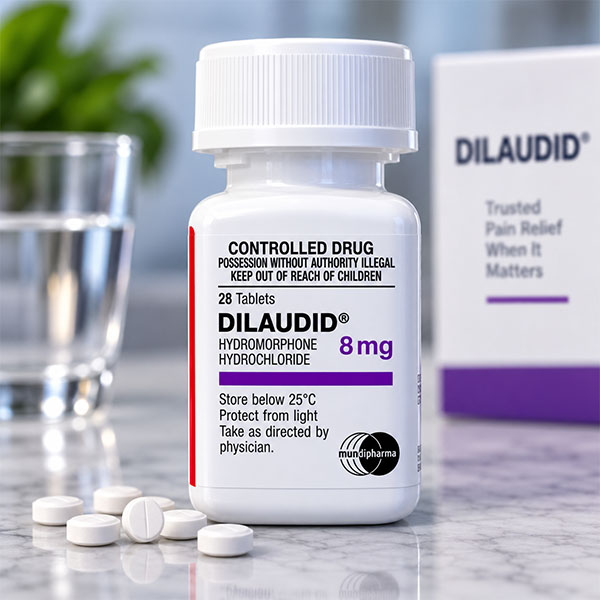


Dilaudid
Dilaudid is the brand name for hydromorphone, a prescription opioid analgesic used to manage severe pain when treatment with other pain medicines is not sufficient or appropriate.
Hydromorphone is a full opioid agonist that acts primarily on mu-opioid receptors in the central nervous system. Activation of these receptors changes how the brain and nervous system perceive and respond to pain, producing analgesic and sedative effects.
Because Dilaudid can cause serious respiratory depression, misuse, addiction, and physical dependence, it should be used only under the supervision of a qualified healthcare professional.
Product Details
| Product Attribute | Details |
|---|---|
| Brand Name | Dilaudid |
| Generic Name | Hydromorphone |
| Drug Class | Opioid Analgesic |
| Active Ingredient | Hydromorphone |
| Primary Medical Use | Severe pain |
| Drug Type | Full opioid agonist |
| Available Forms | Depending on product and jurisdiction |
| Route | Oral or injectable formulations depending on product |
| Prescription Status | Prescription-controlled medication |
| Medical Supervision | Required |
How Dilaudid Works
Hydromorphone binds primarily to mu-opioid receptors in the central nervous system. This reduces the transmission and perception of pain signals and can produce analgesic, sedative, and other opioid effects.
The response varies between individuals, and opioid therapy should be carefully monitored by a healthcare professional.
Medical Uses
Dilaudid may be prescribed for the management of severe acute or chronic pain when an opioid analgesic is medically appropriate.
It may be considered in situations where:
- Pain is severe
- Other analgesic treatments are inadequate
- A healthcare professional determines that opioid treatment is appropriate
- Close monitoring of treatment is possible
The specific formulation and treatment plan depend on the patient’s condition and medical history.
Common Side Effects
Possible side effects of hydromorphone include:
- Drowsiness
- Dizziness
- Nausea
- Vomiting
- Constipation
- Sweating
- Itching
- Dry mouth
- Headache
- Sedation
- Low blood pressure
Side effects can be more pronounced when treatment is first started or when the dose is changed.
Serious Safety Information
Hydromorphone can cause life-threatening respiratory depression, particularly during treatment initiation, after dose increases, or when combined with other substances that suppress the central nervous system.
Emergency medical attention is required for symptoms such as:
- Slow or shallow breathing
- Difficulty breathing
- Extreme sleepiness
- Inability to wake up
- Loss of consciousness
- Severe confusion
- Bluish or gray lips or skin
Risk of Misuse, Addiction, and Dependence
Dilaudid is a potent opioid and carries risks of misuse, opioid use disorder, addiction, and physical dependence.
Physical dependence can develop with regular use. Abrupt discontinuation after prolonged use may cause withdrawal symptoms.
Treatment should be managed and discontinued according to a healthcare professional’s instructions.
Drug Interactions
Hydromorphone can interact with many medicines and substances, especially other central nervous system depressants.
Important examples include:
- Alcohol
- Benzodiazepines
- Other opioids
- Sedative or sleep medications
- Certain muscle relaxants
- Other medicines that depress breathing
Combining opioids with benzodiazepines, alcohol, or other CNS depressants can significantly increase the risk of profound sedation, respiratory depression, coma, and death.
Important Precautions
Before using Dilaudid, patients should inform their healthcare professional about their medical history, particularly if they have:
- Asthma or other breathing problems
- Sleep apnea
- Chronic lung disease
- Liver or kidney problems









There are no reviews yet.