

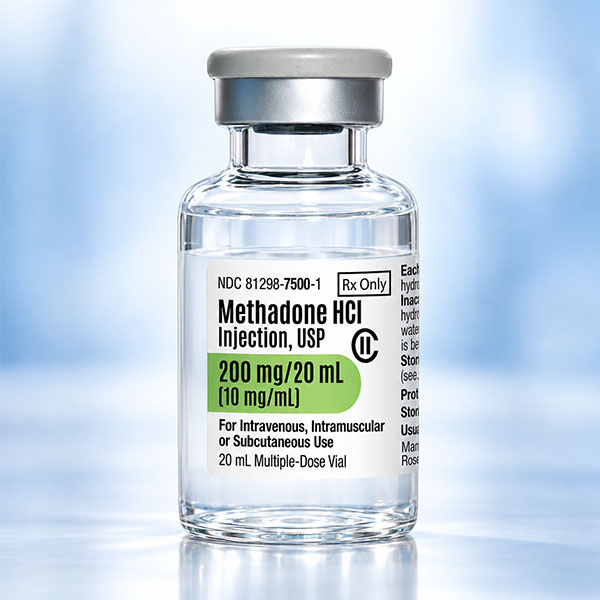

Methadone Hydrochloride
Methadone Hydrochloride is a synthetic opioid medication used in specific medical settings, including opioid dependence treatment and pain management. It acts on the central nervous system by interacting primarily with opioid receptors and has a prolonged duration of action.
Methadone is a prescription-controlled medicine that requires professional medical supervision. Its pharmacological properties, including its long half-life and potential for respiratory depression, make accurate dosing, monitoring, and appropriate patient selection essential.
Product Overview
Methadone Hydrochloride is the hydrochloride salt of methadone, a synthetic opioid agonist. It is available in different pharmaceutical formulations and strengths, depending on the manufacturer and intended clinical use.
Methadone may be used in regulated healthcare settings for:
- Opioid use disorder treatment programs
- Medically supervised opioid dependence management
- Selected cases of chronic pain management
- Pharmaceutical and clinical pharmacology research
The appropriate indication depends on the approved formulation, local regulations, patient characteristics, and the prescribing healthcare professional’s assessment.
Pharmacological Profile
Methadone primarily acts as a mu-opioid receptor agonist. Its activity at these receptors contributes to analgesic effects and the suppression of opioid withdrawal symptoms.
Methadone also has activity involving the N-methyl-D-aspartate (NMDA) receptor and certain neurotransmitter transport mechanisms. These additional pharmacological properties may contribute to its clinical effects and differences from other opioids.
Mechanism of Action
Methadone interacts with opioid receptors in the central nervous system. Its effects may include:
- Modulation of pain perception
- Reduction of opioid withdrawal symptoms
- Suppression of opioid cravings in supervised treatment
- Central nervous system effects associated with opioid activity
Methadone’s long and variable elimination half-life means that its effects can accumulate, particularly when treatment is initiated or the dosage is changed.
Key Product Characteristics
1. Active Ingredient
Methadone Hydrochloride.
2. Drug Classification
Synthetic opioid analgesic and opioid agonist medication.
3. Pharmaceutical Applications
Depending on the approved product and local regulations, methadone may be used in opioid dependence treatment or pain management.
4. Controlled Prescription Status
Methadone is subject to prescription and controlled-substance regulations in many jurisdictions. Distribution and use must comply with applicable laws and professional requirements.
5. Formulation
Available formulations may include oral tablets, oral solutions, and other approved pharmaceutical forms. The exact formulation must be confirmed using the manufacturer’s official product documentation.
Clinical and Research Areas
Methadone is studied and used in several areas of medical and pharmaceutical science.
Opioid Use Disorder Treatment
In supervised treatment programs, methadone can help reduce opioid withdrawal symptoms and cravings. Treatment is generally delivered through regulated healthcare services with ongoing clinical monitoring.
Pain Management
Methadone may be prescribed for selected pain-management situations by appropriately qualified healthcare professionals. Its pharmacokinetic variability and risk of delayed respiratory depression require careful clinical consideration.
Pharmacokinetic Research
Methadone is examined in research involving:
- Absorption and distribution
- Metabolism and elimination
- Drug-drug interactions
- Variability in patient response
- Long elimination half-life
- Medication safety and monitoring
Opioid Pharmacology
Methadone is used as a subject in research into opioid receptor activity, dependence, tolerance, analgesia, and central nervous system pharmacology.
Safety Considerations
Methadone is a potent prescription opioid and can cause serious or life-threatening adverse effects when used incorrectly.
Important safety considerations include:
- Respiratory depression
- Sedation and impaired alertness
- Physical dependence
- Opioid tolerance
- Overdose risk
- Drug interactions
- Constipation and other opioid-related effects
- Potential QT-interval prolongation and cardiac arrhythmias
Combining methadone with alcohol, sedatives, benzodiazepines, or other central nervous system depressants may increase the risk of severe sedation, respiratory depression, coma, or death.
Methadone should only be used according to an authorized healthcare professional’s instructions and the applicable official prescribing information.
Product Information
| Attribute | Details |
|---|---|
| Product Name | Methadone Hydrochloride |
| Active Ingredient | Methadone Hydrochloride |
| Drug Category | Synthetic opioid |
| Pharmacological Class | Opioid receptor agonist |
| Common Clinical Areas | Opioid dependence treatment and selected pain-management applications |
| Administration | Depends on the approved formulation |
| Legal Status | Controlled prescription medicine in many jurisdictions |
| Storage | Follow the approved manufacturer’s label |
| Documentation | Refer to official product and regulatory documentation |
Storage and Handling
Storage conditions depend on the pharmaceutical formulation and manufacturer. The official product label should be consulted for specific requirements.
General handling principles include:
- Store the product according to the manufacturer’s instructions.
- Keep medicines away from unauthorized access.
- Keep out of reach of children.
- Do not use damaged, expired, or improperly stored products.
- Maintain appropriate records where required by applicable regulations.
- Follow controlled-substance handling and disposal requirements.
Frequently Asked Questions
What is Methadone Hydrochloride?
Methadone Hydrochloride is the hydrochloride salt of methadone, a synthetic opioid medication used in regulated medical settings, including opioid dependence treatment and selected pain-management applications.
Is methadone a prescription medicine?
Yes. Methadone is a controlled prescription medication in many countries and is subject to specific legal and clinical requirements.
What is methadone used for?
Depending on the approved formulation and local regulations, methadone may be used in opioid use disorder treatment and for selected types of pain management.
Does methadone have a long duration of action?
Methadone has a relatively long and variable elimination half-life. Its pharmacological effects and drug accumulation require careful professional monitoring.
Can methadone cause dependence?
Yes. Methadone can cause physical dependence and other opioid-related risks. Treatment decisions and discontinuation should be managed by a qualified healthcare professional.
What documentation is associated with methadone products?
Documentation may include the official product label, prescribing information, safety information, batch documentation, and applicable regulatory records. The available documents depend on the manufacturer and product formulation.
Important Safety Disclaimer
This information is provided for general pharmaceutical and educational purposes. Methadone Hydrochloride is a controlled prescription opioid and must be prescribed, supplied, stored, and administered in accordance with applicable laws, approved product information, and qualified medical supervision.
This content does not replace professional medical advice, official prescribing information, or regulatory documentation. Do not use, modify, or discontinue methadone treatment without guidance from an authorized healthcare professional.

There are no reviews yet.